
Common Dietary Patterns in Ghana
Watch Lesson Video/Audio/Reading
English
Twi
Reading Notes
The Ghanaian Nutritional Transition
Ghana is currently experiencing a major dietary shift. Traditional, agrarian, whole-food diets are rapidly being replaced by urbanized, highly processed, and energy-dense foods. This shift is most prominent in rapidly growing urban centers like Accra, Kumasi, and Tamale.
1. Traditional vs. Modern Eating Habits
- The Traditional Framework: Historically, the Ghanaian diet is plant-based, deeply rooted in local agriculture, and reliant on whole crops. It heavily utilizes local stews and soups packed with indigenous vegetables, fish, snails, and lean game.
- The Modern Shift: Urbanization, hectic work schedules, and long commutes have decreased the time available for complex food preparation. This has driven a massive increase in eating outside the home, relying on commercial food vendors, and purchasing shelf-stable imported items.
- The Status Symbol Change: Westernized fast food and imported packaged items are frequently marketed—and perceived—as symbols of modern, affluent, urban success.
2. The Nature of High-Carbohydrate Staples
- The Baseline: Traditional main courses are heavily carbohydrate-based. These include pounded or cooked starches derived from local root crops and grains:
- -Fufu (pounded cassava and plantain/yam)
- -Banku and Kenkey (fermented maize and cassava)
- -Tuo Zaafi (millet or sorghum)
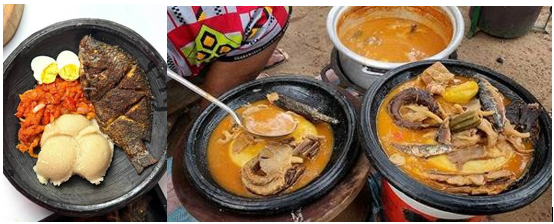
- The Role of Accompanying Soups: Traditionally, these heavy starches are not eaten alone. They act as vehicles for nutrient-dense, fiber-rich, and antioxidant-packed companion dishes like light soup, palm nut soup, green Kontomire (cocoyam leaves) stew, or okro soup.
- The Rice Phenomenon: Polish imported white rice has grown exponentially in popularity. Because it requires no pounding or extensive fermentation, it has replaced traditional root staples as a fast, daily convenience food in modern households (e.g., Jollof, Waakye, plain rice).
3. Proliferation of Fast Food and Processed Items
- Street and Commercial Foods: The urban landscape features an abundance of cheap, easily accessible street foods that favor high-fat, high-salt cooking methods (such as chofi or deep-fried turkey tails, fried yam, and commercial fried rice).
- Processed Ingredients: Modern Ghanaian kitchens have seen a massive influx of factory-processed convenience helpers. Instant noodles and heavily salted, synthetic seasoning cubes are now staples of quick home cooking, displacing traditional fermented locust beans (dawadawa) or natural spices.
- Liquid Calories: Heavily sweetened carbonated soft drinks, artificial fruit juices, and industrial energy drinks have widely replaced water or traditional home-brewed beverages like Asaana or minimal-sugar Koko.
Critical Summary for Study
- The Cultural Value: Traditional Ghanaian eating patterns are inherently rich in micronutrients and fiber when starches are balanced with local soups and stews.
- The Modern Vulnerability: The primary issue in contemporary Ghana is not the presence of carbohydrates, but the loss of balance—specifically, the combining of larger carbohydrate portions with processed fats, massive sodium spikes from commercial seasonings, and a drastic decline in physical activity due to urban lifestyles
1. Statistical Data: Ghanaian Health Trends
You can use these recent key indicators to back up arguments regarding the impact of the dietary transition:
- The Overweight and Obesity Surge: Data from the Ghana Demographic and Health Survey (GDHS) reveals that over 40% of women and roughly 16% of men in Ghana are classified as overweight or obese, with the highest concentration found in urbanized areas like Greater Accra and Ashanti regions.
- The Heavy NCD Burden: Official public health data highlights that Non-Communicable Diseases (NCDs) have officially become the heaviest overall health crisis and disease burden in Ghana.
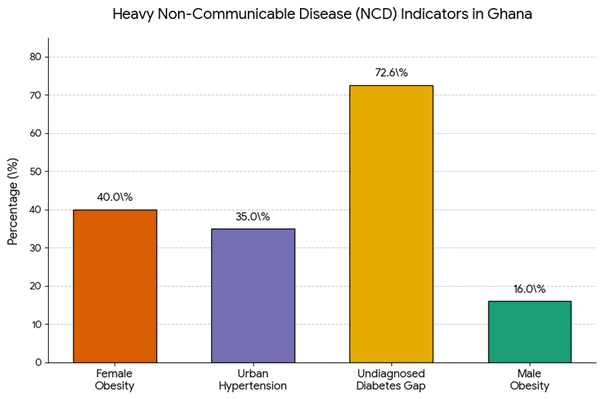
- Hypertension & Stroke: Hypertension affects nearly 30% to 35% of the adult population in urban environments, driving a massive increase in strokes and renal (kidney) complications nationwide.
- The Undiagnosed Diabetes Gap: According to the International Diabetes Federation (IDF) Atlas, Africa holds the highest rate of undiagnosed diabetes globally at 72.6%. In Ghana, a vast majority of Type 2 diabetes cases remain completely undetected until severe complications (like diabetic ulcers or cardiovascular events) present themselves.
- Dietary Risk Factors: Recent spatial and urban health studies track that contemporary urban Ghanaians have seen dietary patterns where 67% regularly consume polished white rice and more than 21% regularly consume sugar-sweetened beverages on a daily basis, heavily replacing traditional homemade staples.
2. Traditional Ingredients for Nutritional Analysis
When evaluating traditional versus modern diets, contrast these native ingredients against processed alternatives:
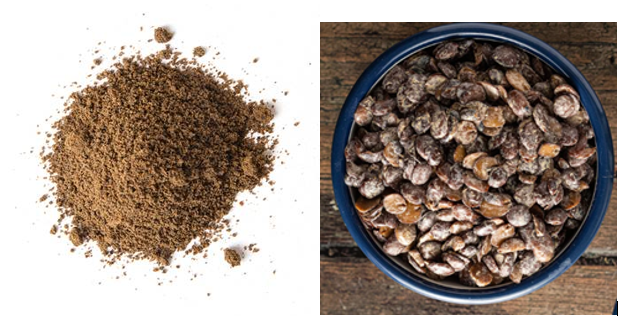
- Dawadawa (Fermented Locust Beans): A traditional savory seasoning rich in protein, healthy fats, and riboflavin. It acts as a natural flavor enhancer with cardiovascular benefits, though it is actively being displaced by high-sodium industrial seasoning cubes.
- Kontomire (Cocoyam Leaves): A dark, leafy green vegetable exceptionally rich in dietary fiber, beta-carotene, vitamin C, and non-heme iron. It is ideal for supporting immune function and lowering the glycemic load of high-carbohydrate starchy meals

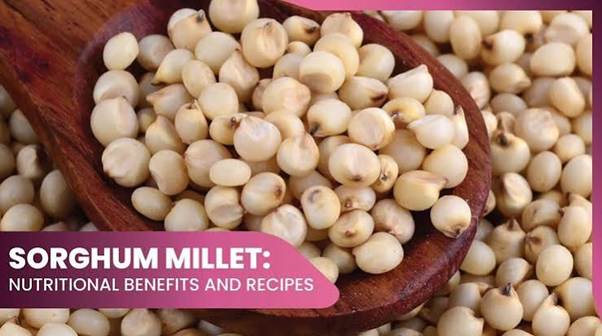
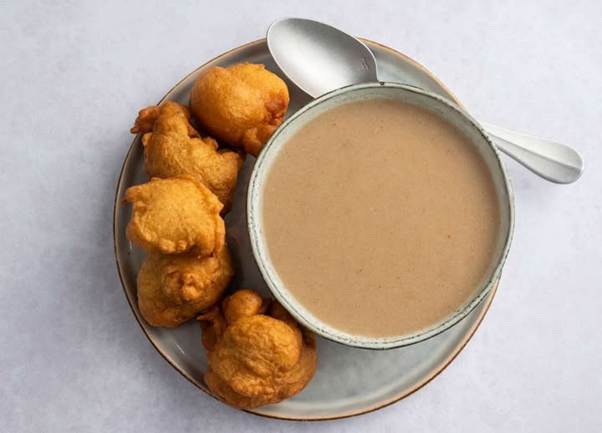
- Millet & Sorghum (Indigenous Grains): Complex, high-fiber, low-glycemic carbohydrates used in dishes like Tuo Zaafi or traditional Hausa Koko. They offer slow, sustained glucose release compared to heavily milled, fast-absorbing imported white rice.
- Palm Oil (Unrefined/Crude): A traditional source of energy, rich in carotenoids and tocotrienols (Vitamin E). Analysis note: While nutritious in small amounts, modern urban preparation often super-saturates stews with excess oil, turning a traditional asset into a metabolic risk factor for obesity.